
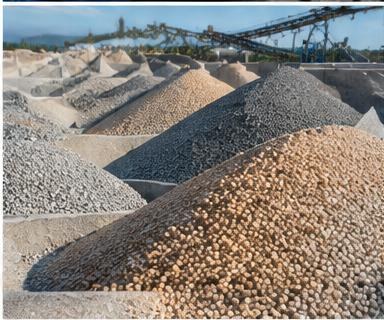
General Classification of Aggregate Sizes
Aggregate is typically classified into categories by particle diameter, from fine aggregate like sand to coarser sizes used in base layers. This classification is not merely a formal detail but directly determines how the material interacts with other mix components or how it compacts when used in road layers.
Effect of Size on Mix Strength
Choosing an unsuitable aggregate size can lead to excess voids within the mix or weak bonding between particles and cement. Aggregate that is too large for a fine concrete mix can cause uneven strength distribution, while aggregate too small for a base layer may not provide sufficient stability to bear traffic load.
Importance of Particle Gradation
It is not just about a single size; a graded mix of sizes is often preferred, progressively filling voids and achieving higher density. This carefully considered particle gradation reduces the amount of cement or binding material needed to fill voids, which can positively reflect on overall mix efficiency without affecting its durability.
Determining the Right Size Before Ordering
Before placing a purchase order, it is useful to review the project's engineering requirements to accurately define the needed size range rather than relying on a general estimate. Clear communication with the supplier about the final use, whether structural pour, backfill, or base layer, helps ensure the correct size is supplied from the first order.
Practical checklist
- Review engineering requirements before defining size
- Use suitable gradation to reduce voids
- Avoid oversized aggregate in fine mixes
- Clarify final use to the supplier when ordering
 Industrial materials
 Industrial materials
 Industrial materials