
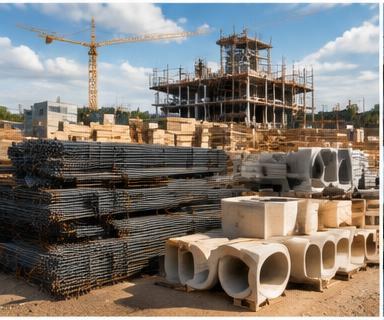
Accurately Estimating Quantities
Overestimating quantities leads to excess storage costs and occupied space without real need, while underestimating causes work stoppage while awaiting an additional supply batch. Carefully reviewing engineering plans before determining required quantities, with a reasonable margin for expected waste, helps achieve a better balance between cost and work continuity.
Balancing Quality and Cost
The cheapest material is not always the best choice if its lower quality leads to later problems requiring costly repair. It is useful to evaluate materials based on their suitability to actual project requirements rather than pursuing the lowest price alone, especially for sensitive structural elements that are difficult to adjust after execution.
Order Timing and Supply Scheduling
Linking material order timing to the actual on-site work schedule reduces unnecessary long storage periods and preserves the quality of materials sensitive to extended storage. Advance coordination with the supplier on expected delivery dates, especially for materials ordered in large quantities, helps align supply with the project's different execution phases.
Verifying Source Reliability
Working with a reliable source reduces the risk of quality fluctuation between batches, which matters especially in large projects needing repeated quantities of the same material over an extended period. Requesting samples or clarification about a material's source and type before contracting large quantities helps reduce unwanted surprises later.
Practical checklist
- Review engineering plans before estimating quantities
- Balance quality and cost per usage sensitivity
- Align supply timing with the actual work schedule
- Verify source reliability before contracting large quantities
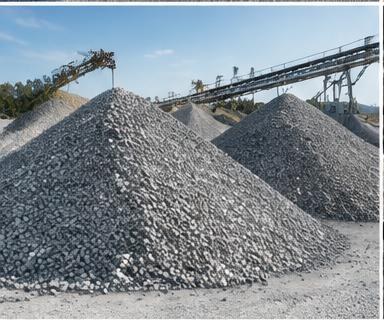 Industrial materials
 Industrial materials
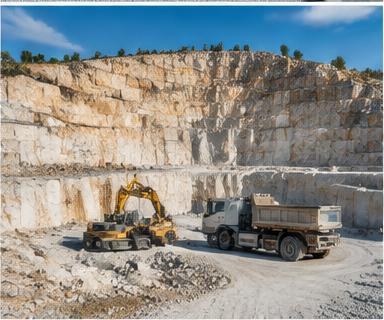 Industrial materials