
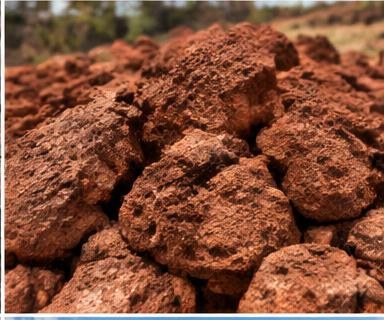
Formation and Properties of Laterite
Laterite forms from the weathering of iron- and aluminum-rich rocks in tropical or humid subtropical climates over long periods. It is characterized by its red or rust-brown color resulting from its high iron oxide content.
Use as an Iron Oxide Corrective
When limestone or other materials in the blend are low in iron oxide content, laterite is added to compensate for this deficiency and adjust the chemical ratios needed to form clinker with the desired properties.
Testing Content Before Use
Because laterite composition varies by geological source, it undergoes chemical analysis to determine its iron oxide, alumina, and silica content before being added to the blend, ensuring accurate calculation of required quantities.
Its Place Among Other Corrective Materials
Laterite is used as an alternative or supplement to iron ore in some plants, and the choice between them depends on availability and the actual chemical composition of each material. Both options serve the same purpose of adjusting iron oxide content in the blend.
Practical checklist
- Learn about laterite's geological formation
- Understand its role as an iron oxide corrective
- Recognize the importance of testing before use
- Compare its role with iron ore as an alternative
 Industrial materials
 Industrial materials
 Industrial materials