
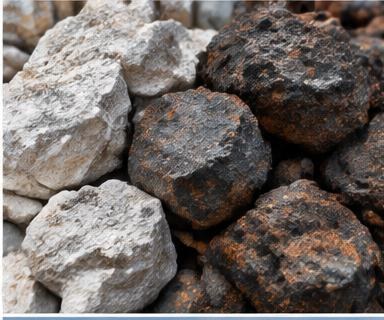
Why Corrective Materials Are Used
Limestone extracted from a single quarry may not contain all required chemical proportions precisely, so corrective materials are used to compensate for deficiencies in certain elements such as silica, alumina, or iron oxide within the final blend.
Examples of Corrective Materials
Materials used to correct the blend include clay, which raises silica and alumina content, sand, which directly increases silica, and iron ore, which compensates for iron oxide deficiency. Choosing the appropriate material depends on the actual composition of the available limestone.
Chemical Analysis Testing
Samples of limestone and corrective materials undergo periodic chemical analysis to determine the proportions of their main elements. These tests help calculate the precise ratios needed for each material within the blend before grinding and burning.
Impact of Correction on Product Quality
Adjusting the blend through corrective materials contributes to obtaining clinker with consistent properties from one batch to another. This consistency matters because fluctuations in chemical composition can affect the final cement's properties and strength after setting.
Practical checklist
- Understand why corrective materials are used
- Learn common examples like clay and sand
- Note the role of periodic chemical analysis
- Link correction to consistent clinker quality
 Industrial materials
 Industrial materials
 Industrial materials