
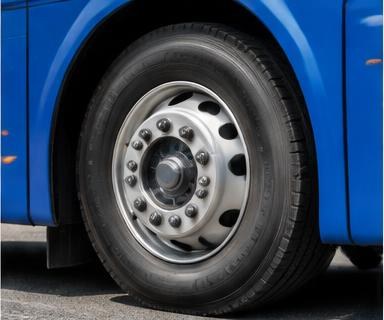
Safety Priority in Mass Transit
Given the high passenger count per trip, any shortfall in tyre performance carries greater risk than in individual vehicles. Bus tyres are therefore subject to stricter inspection standards for tread depth and sidewall integrity, particularly on buses operating long routes or under continuous high-temperature conditions.
Comfort and Ride Stability
Beyond safety, tyre condition directly affects bus stability during turns and braking, a factor important for passengers standing or seated for long periods. Uneven wear or pressure differences between tyres can cause noticeable vibration that reduces ride quality even when it does not reach an actual safety threshold.
Inspection Scheduling for Long-Route Buses
Buses on long inter-emirate routes cover significant daily distances, requiring more frequent inspection than short internal shuttle services. This includes watching for early wear signs on front tyres, which bear greater steering load, as well as monitoring load balance when passenger capacity is full.
Impact of Operating Conditions on Tyre Life
Frequent stop-start cycles for passenger boarding in urban buses differ from the near-continuous driving of highway coaches, and each pattern imposes different stress on tyres. Understanding these differences helps bus operators set realistic tyre-life expectations rather than relying on a generic figure that ignores route variation.
Practical checklist
- Check tread depth and sidewall integrity regularly
- Watch front tyres for early wear signs
- Balance pressure across all tyres at full capacity
- Set different inspection schedules for long and short routes
 Tyres
 Tyres
 Tyres