
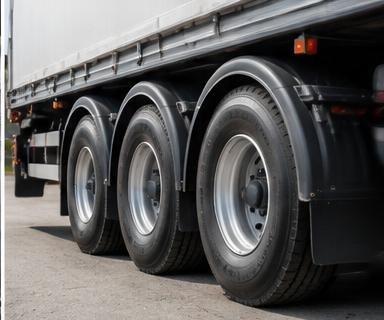
The Specifics of Load Distribution
Unlike tractor unit tyres that handle driving and steering forces, trailer tyres mostly bear only the weight of the cargo without contributing to propulsion. This means wear patterns differ, tending toward even centre-tread wear when the load is well distributed, or uneven edge wear when there is a weight distribution imbalance.
Importance of Axle Balance
Multi-axle trailers need balanced load distribution across all axles to avoid excess stress on any single axle. This imbalance leads to accelerated wear on the tyres of the more heavily loaded axle, noticeably shortening their service life compared with tyres on other axles operating below their rated capacity.
Impact of Long Idle Periods
Trailers left idle for long periods between trips, common in heavy material transport, face different risks than continuously operating vehicles, such as localised tyre deformation from remaining stationary under load for extended periods. Rotating the trailer's position or relieving load during long idle periods where possible is advisable.
Periodic Checks Before Long Trips
Since trailers are often checked less frequently than the tractor unit, it is important to schedule a separate periodic check covering air pressure, sidewall condition, and tread before every long trip or particularly heavy haul. This separate check reduces the likelihood of on-road failures caused by unintentional neglect of trailer tyres.
Practical checklist
- Distribute load evenly across trailer axles
- Inspect trailer tyres separately from the tractor unit
- Minimise long standstill periods under full load
- Check pressure before every heavy haul trip
 Tyres
 Tyres
 Tyres