
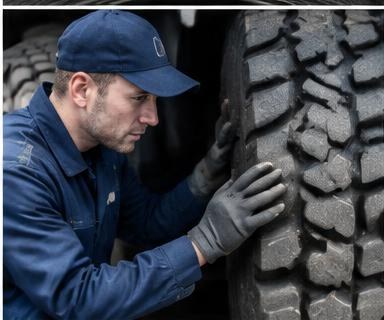
Regularly Checking Tread Depth
Measuring tread depth is one of the simplest and most important periodic checks, directly reflecting a tyre's road grip capability, especially during sudden braking. Uneven wear between different points of the same tyre may indicate an alignment or load distribution issue worth following up rather than ignoring.
Monitoring Air Pressure Periodically
Incorrect air pressure is one of the most common causes of uneven wear and excess fuel consumption. It is preferable to check pressure when the tyre is relatively cool for an accurate reading, keeping in mind that higher daytime temperatures naturally raise internal pressure without necessarily indicating an actual problem.
Checking Sidewalls for Visible Damage
Tyre sidewalls are prone to damage from contact with kerbs or sharp edges, and this damage may appear as small cracks or abnormal bulges. Any noticeable sidewall bulge warrants immediately discontinuing use of that tyre, as it may indicate internal structural weakness that could lead to a sudden blowout while driving.
Keeping a Regular Maintenance Record
Documenting the results of each inspection in an organised log helps track wear trends over time rather than relying on memory or random observation. This log also makes it easier to plan timely tyre replacement, particularly for fleet owners managing a large number of vehicles simultaneously.
Practical checklist
- Measure tread depth regularly and consistently
- Check pressure when the tyre is cool
- Look for bulges or cracks on sidewalls
- Keep a documented maintenance record per tyre
 Tyres
 Tyres
 Tyres